Installing a pond in your outdoor space isn’t limited to people with gardens. We’ve started with our top tips for conventional in-the-ground ponds, but underneath you’ll also find a handy guide for adapting this advice for a wildlife pond in a container too.

Building a wildlife pond in the ground
- Pick a bright, open spot: To start, aim for a location that receives plenty of natural daylight without sitting in direct, intense sun all day long. Keeping away from large trees helps prevent falling leaves from smothering the water and stops roots from puncturing your liner.
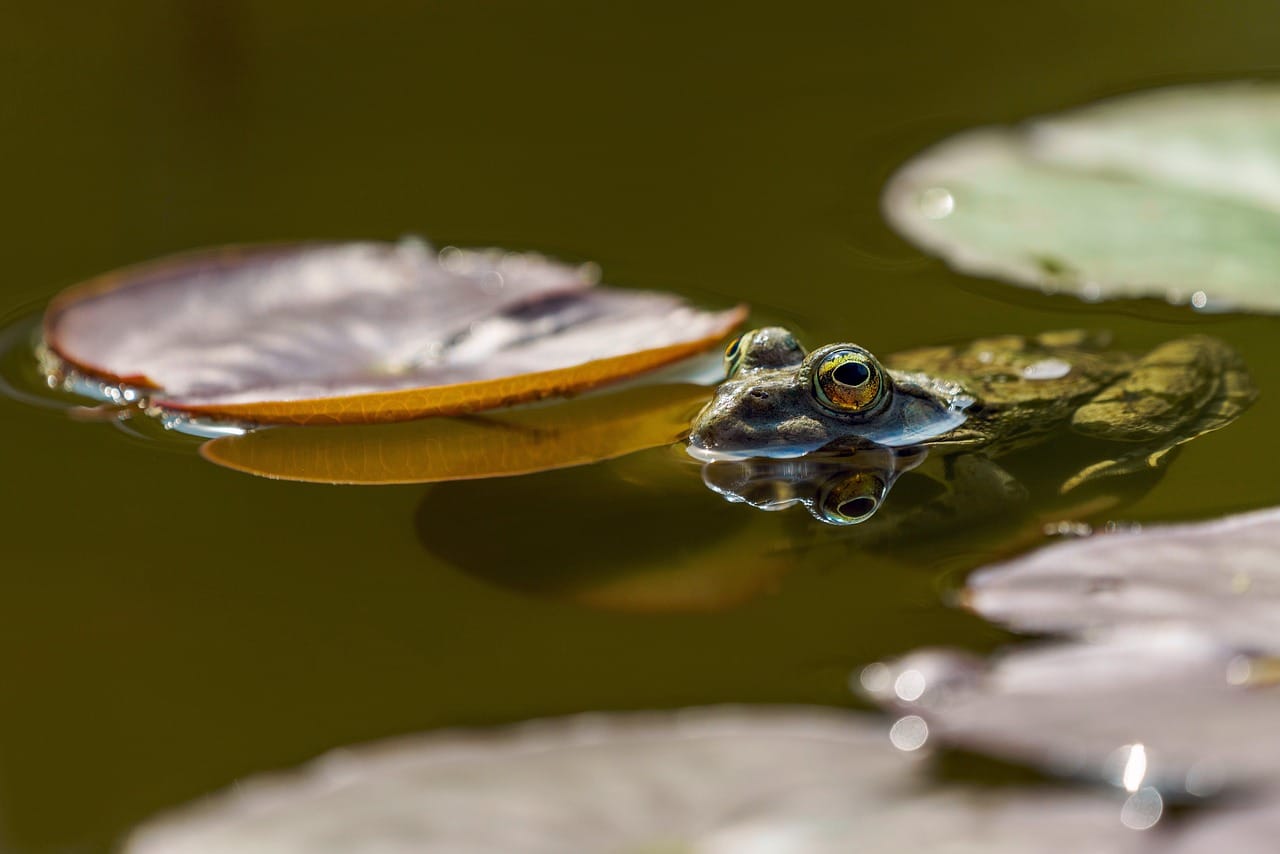
- Design with shallow, sloping edges: Wildlife needs an easy escape route, so build gently sloped margins so animals like frogs and newts – or any accidental swimmers like hedgehogs – can climb out safely.
- Size doesn’t matter: It doesn’t need to be huge. A wildlife pond the size of a kitchen sink is definitely better than nothing, and a maximum depth of around 30 cm in the middle is plenty deep enough for underwater life.
- Choose the right liner for your space: Pre-moulded liners are durable and straightforward, while flexible liners like EPDM rubber are ideal if you want a natural, curvy shape. Whichever you pick, buy the best quality you can afford to ensure it stays watertight for years. It’s definitely worth the short-term investment for long-term gain.
- Dig out horizontal planting shelves: If you’re using flexible liner, mark your shape using a garden hose or sand before digging, adding shallow ledges along the sides where potted aquatic plants can sit securely. Always check your edges with a spirit level to keep the water level balanced.
- Protect your liner from sharp debris: Clear away all stones, sharp roots, and rocks from the hole before laying down a 50mm cushion of sand and a protective fabric underlay. This extra layer stops underground sharp bits from piercing your liner once the water weight settles in.
- Fill up using harvested rainwater: Tap water contains high levels of nitrates and chemicals that encourage unwanted algae, so fill your pond using water from a water butt whenever possible.
- Disguise the edges with natural cover: Once filled, trim away the excess liner and surround the perimeter with rocks, logs, gravel or turf. This creates an attractive natural finish while giving visiting wildlife extra places to hide and shelter.
- Mix up your aquatic plants: Combine floating plants to shade the water, submerged oxygenators to keep things fresh, and native emergent plants along the edges for habitat. Stick to native species like Yellow Iris and White Water Lily, which thrive locally without taking over. Your local garden centre or nearest aquatic centre will have a good selection and will be able to advise on native plants. You can also order aquatic plants online from specialist sites.
- Skip adding fish to a wildlife pond: Keep fish out of the mix if you want a thriving ecosystem for amphibians and insects. Remember, this isn’t a goldfish pond, it’s a wildlife pond and the aim here is to invite native species into your garden.
- Let nature find its own balance: Expect a little murky water or green algae during the first few months while the pond settles into its new environment. Avoid adding water or creatures from other ponds to prevent spreading diseases, and simply wait for local wildlife to discover their new sanctuary.

Adapting for a container
Adding a water source to a terrace or balcony can be just as rewarding and, though it may attract slightly fewer visitors, it can still make a helpful and visually-appealling addition. Adapting the above advice for a container pond is very straightforward – just bear the below in mind:
- Choose a sturdy, watertight vessel: Half wine barrels, unlined terracotta pots, and zinc tubs look great, but wooden barrels need a plastic liner (or butyl rubber) to prevent leaks and stop wood tannins from leaching into the water. Ensure whatever container you use sits on a strong, level surface, as a full barrel of water can easily weigh over 100 kg and be mindful of weight limits if introducing to a balcony.
- Build stepping stones for easy exits: Because container walls are steep and smooth, creatures can easily get trapped if they fall in. Stack bricks, large flat rocks, or sturdy logs inside to build staggered steps from the bottom right up past the water surface so frogs, birds, and insects can climb in and out safely.
- Scale down your plant choices: Stick to miniature or slow-growing aquatic plants so your tub doesn’t get completely overgrown. Dwarf water lilies, water forget-me-not, and miniature rushes work brilliantly in small pots without suffocating the water surface.
- Keep plants elevated using submerged bricks: Since container ponds lack built-in shelves, rest your aquatic plant baskets on inverted bricks or upside-down terracotta pots submerged at different depths. This lets you position marginal plants near the surface and oxygenators further down.
- Monitor water levels and temperature closely: Small bodies of water heat up and evaporate much faster than in-ground ponds during hot summer spells. Top up regularly using harvested rainwater from a butt, and position the container where it gets partial shade during the hottest afternoon hours to prevent overheating and heavy algae blooms.